


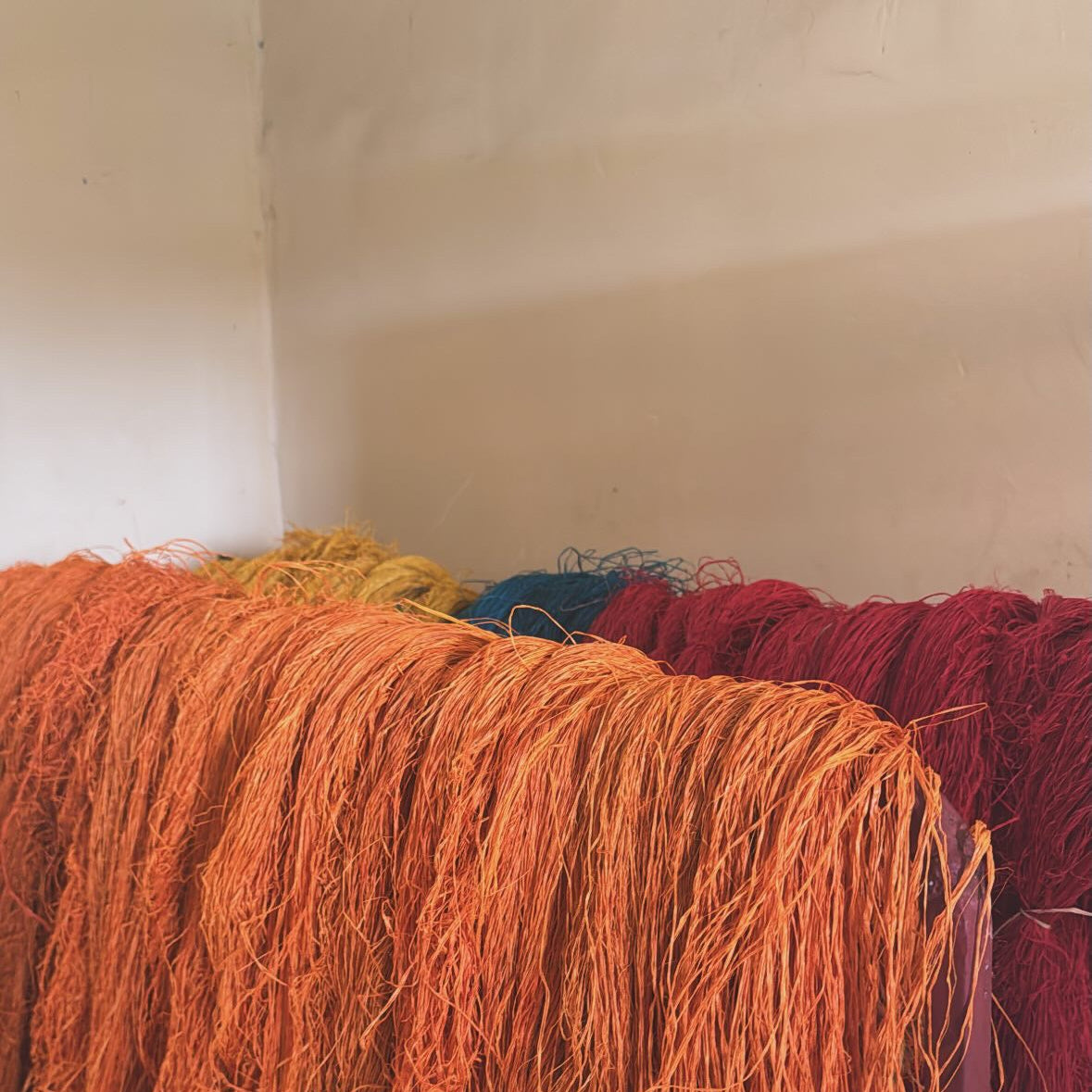
Beyond surface and ornament.
A material system is not limited to a raw material or visual language.
It includes:
- extraction and preparation
- gestures and techniques
- transformation processes
- organizational logic
- transmission methods
- territorial ecosystems
Raffia and Kuba textiles are examples of systems developed through repetition, adaptation and use over time.
Kilubukila studies these systems not as archives, but as active foundations for contemporary production.
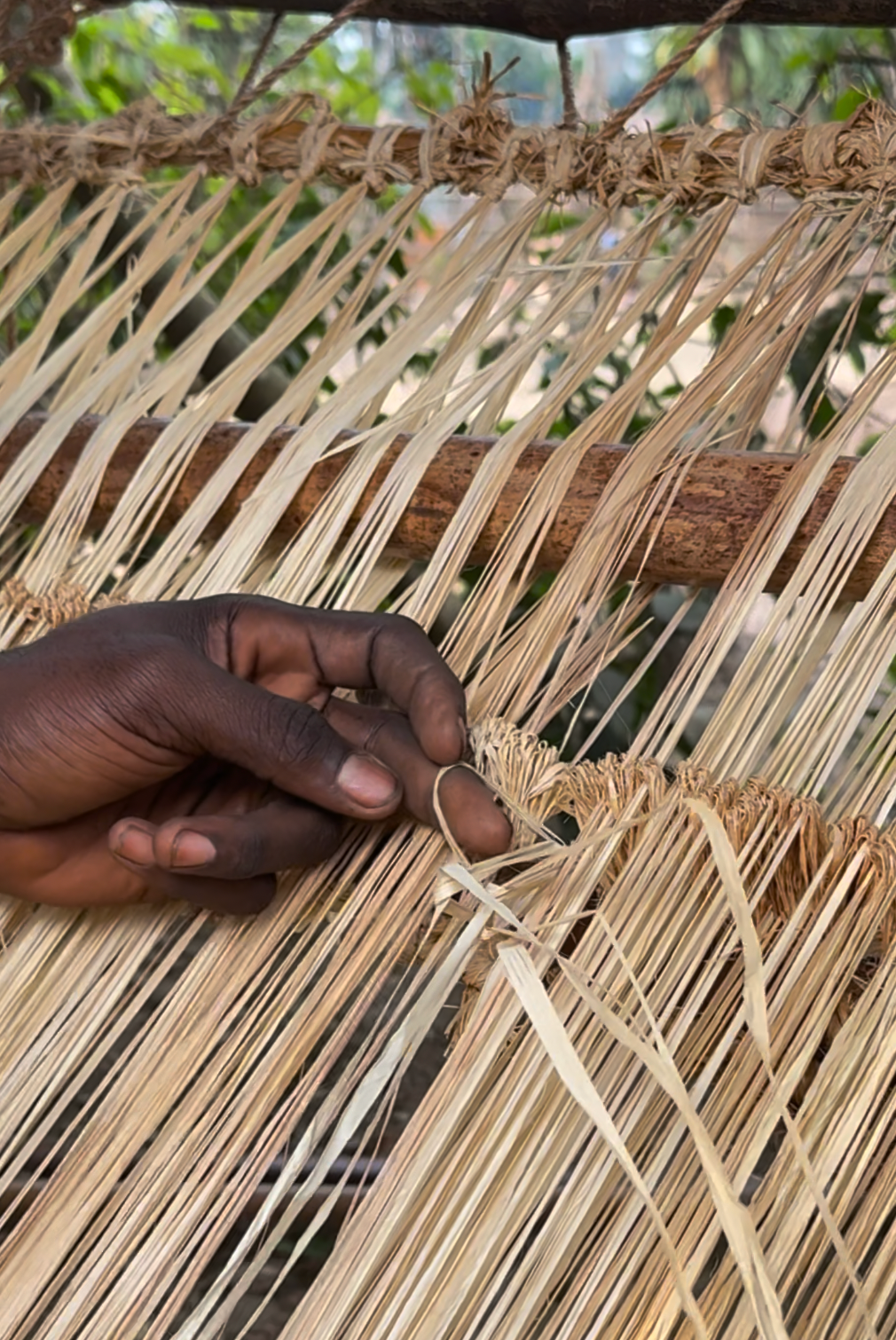
Raffia as a technical material.
Raffia is central to the Kilubukila ecosystem.
Beyond its visual qualities, the fiber presents structural, tactile and transformation properties that make it relevant for contemporary textile and design applications.
Current work explores:
- fiber stabilization
- weaving systems
- dye processes
- flexibility and resistance
- new production applications
Kilubukila approaches raffia not simply as a natural fiber, but as a material platform under development.
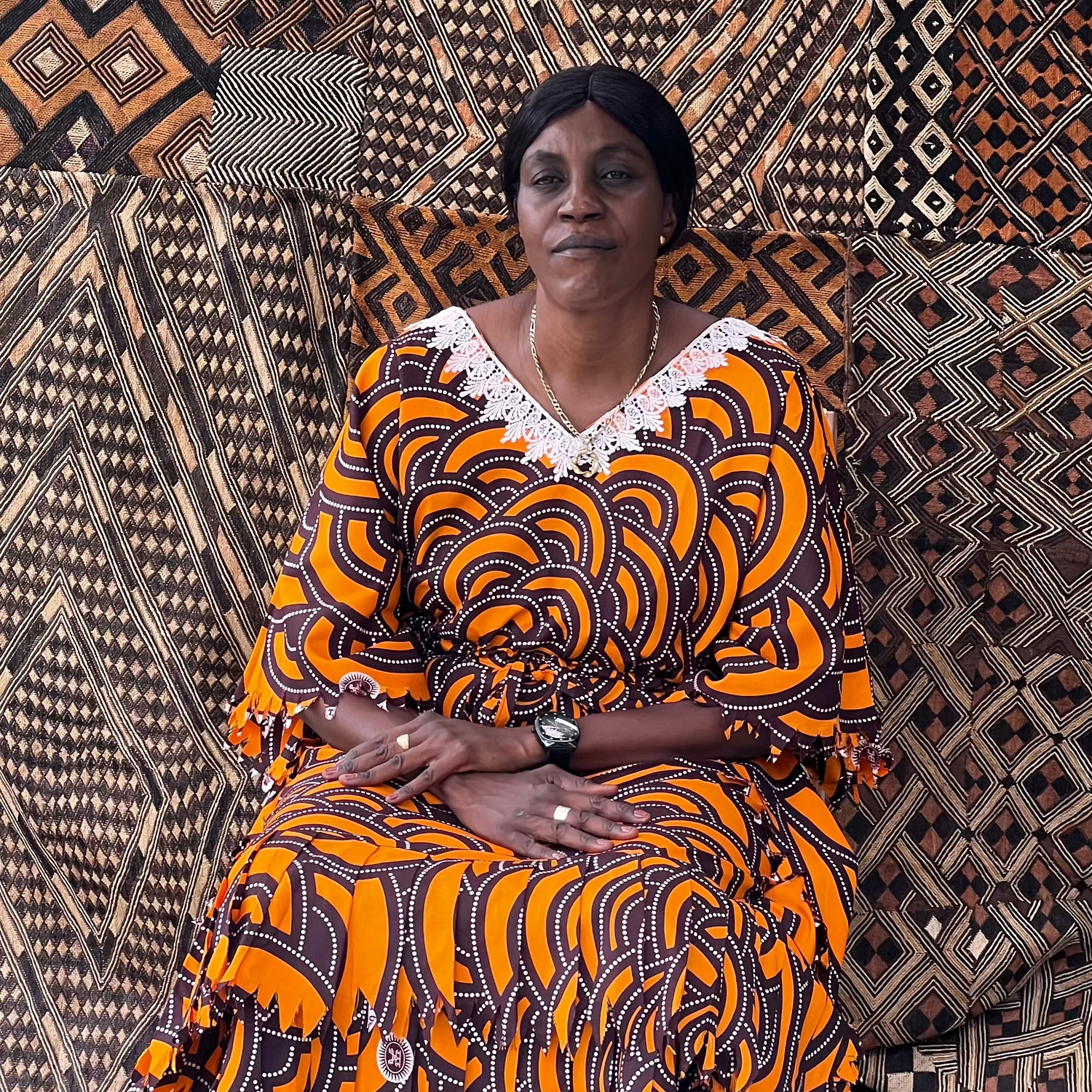
Kuba textiles as structured language.
Kuba textiles are built through rhythm, geometry, repetition and construction.
Their significance extends beyond motif or decoration.
They contain systems of organization, visual logic and methods of composition developed through textile production.
Kilubukila studies how these structures can inform:
- spatial composition
- furniture
- rugs
- contemporary textile systems
- modular design approaches
The objective is not reproduction, but translation.
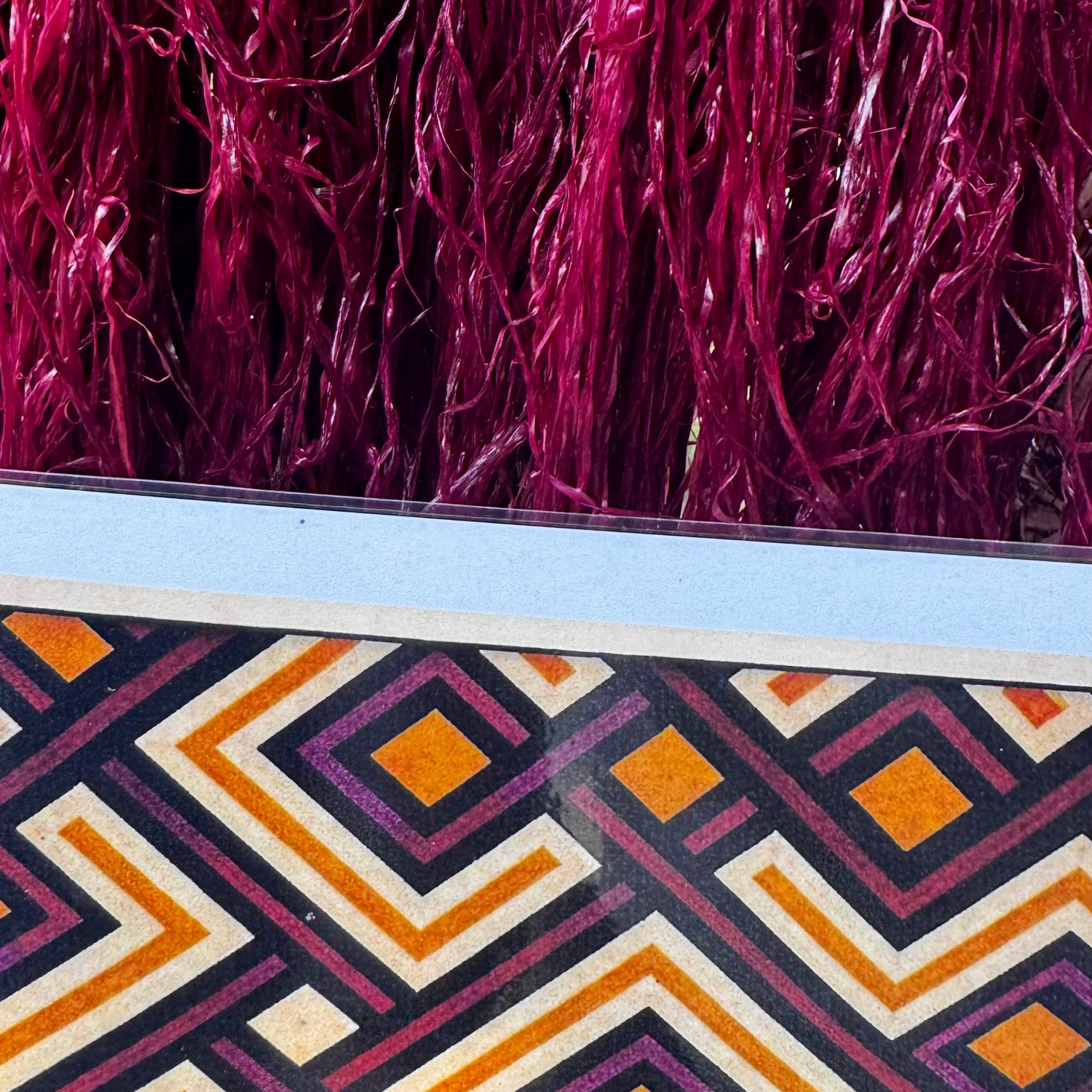
Reading material systems.
Kilubukila defines material literacy as the ability to read, understand and transform material intelligence into contemporary production.
This approach combines:
- observation
- documentation
- experimentation
- production testing
- transmission
Material literacy allows materials to be approached not only through aesthetics, but through structure, performance and production potential.
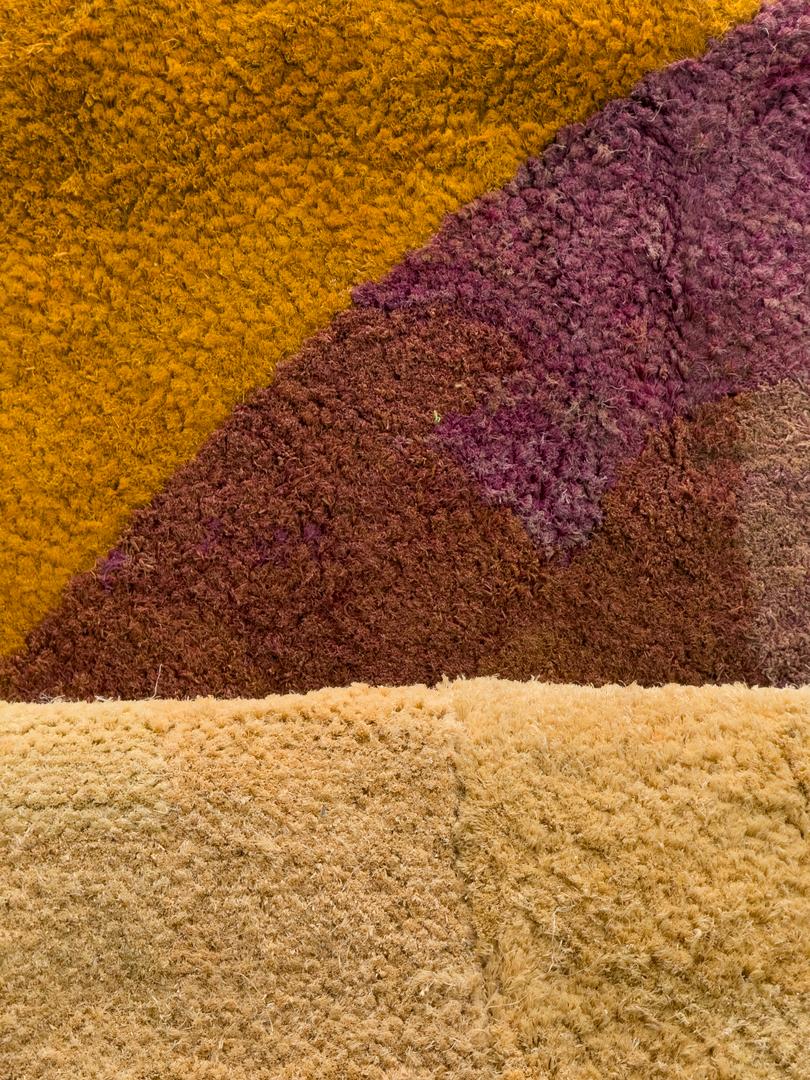
Translating material into contemporary design.
The ecosystem develops applications across:
- furniture
- rugs
- textiles
- interior objects
Each application emerges from ongoing dialogue between:
- material behavior
- production systems
- contemporary use
- spatial design
Production is developed in small batches through structured workshop processes in Kinshasa.
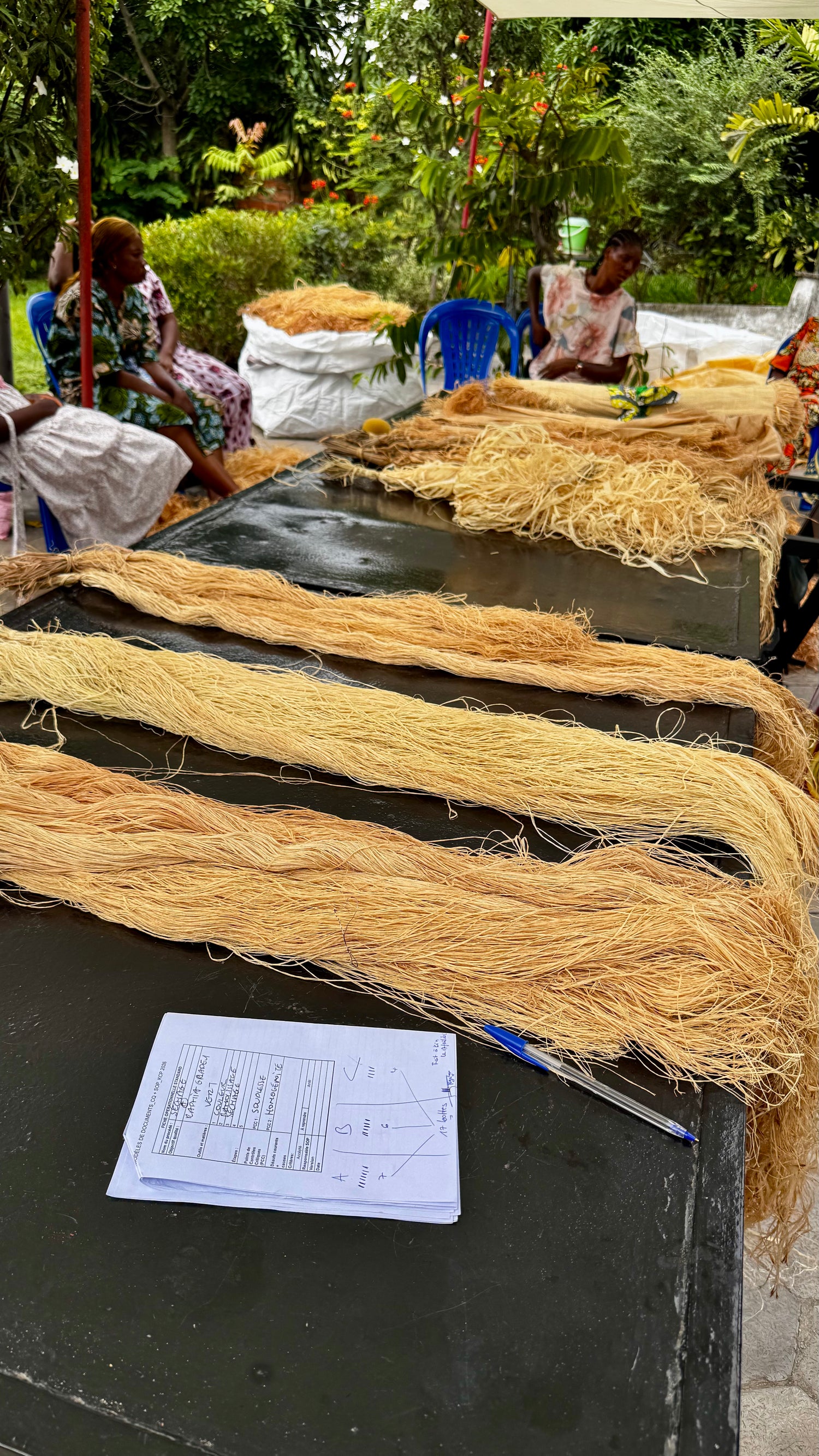
Researching the future of African material systems.
Kilubukila develops ongoing research collaborations focused on raffia and natural fibers across the Democratic Republic of Congo, France and Brazil.
Current research includes:
- fiber stabilization
- natural dyes
- textile treatments
- production standards
- material applications
The long-term objective is to contribute to positioning the Democratic Republic of Congo as a center of excellence for bio-material research, transformation and production in Africa.
Research Collaborations
Current Research
- Raffia stabilization
- Natural dyes
- Fiber treatments
- Material durability
Long-Term Objective
Build the foundations for the Democratic Republic of Congo to emerge as a center of excellence for bio-material research, transformation and production in Africa.
Explore the collections.
Discover how Kilubukila translates material systems into contemporary furniture, rugs, textiles and objects.